
Dosage and mixing
GHK-Cu dosage and mixing
Reference doses with their sources, and the mixing math for each vial size. A calculator, not advice.
What sources report
Each figure with where it comes from.
Show what people report
| Context | Amount | Source |
|---|---|---|
| Systemic use (injected)A once-daily pattern some report for the injectable form, usually in short cycles. | 1–2 mgOnce daily · ~20–30 day cycles (community) | What people report · Anecdotal, not a recommendation Community-reported and anecdotal. The bulk of GHK-Cu research is on TOPICAL/cosmetic use; injectable systemic use is poorly characterized, has no validated dose, and is not a recommendation. |
Vial sizes
Pick your vial size
Each size has its own water table and units for each amount.
- 50 mg vial
- Mixing and units10 mg/mL with 5 mL water
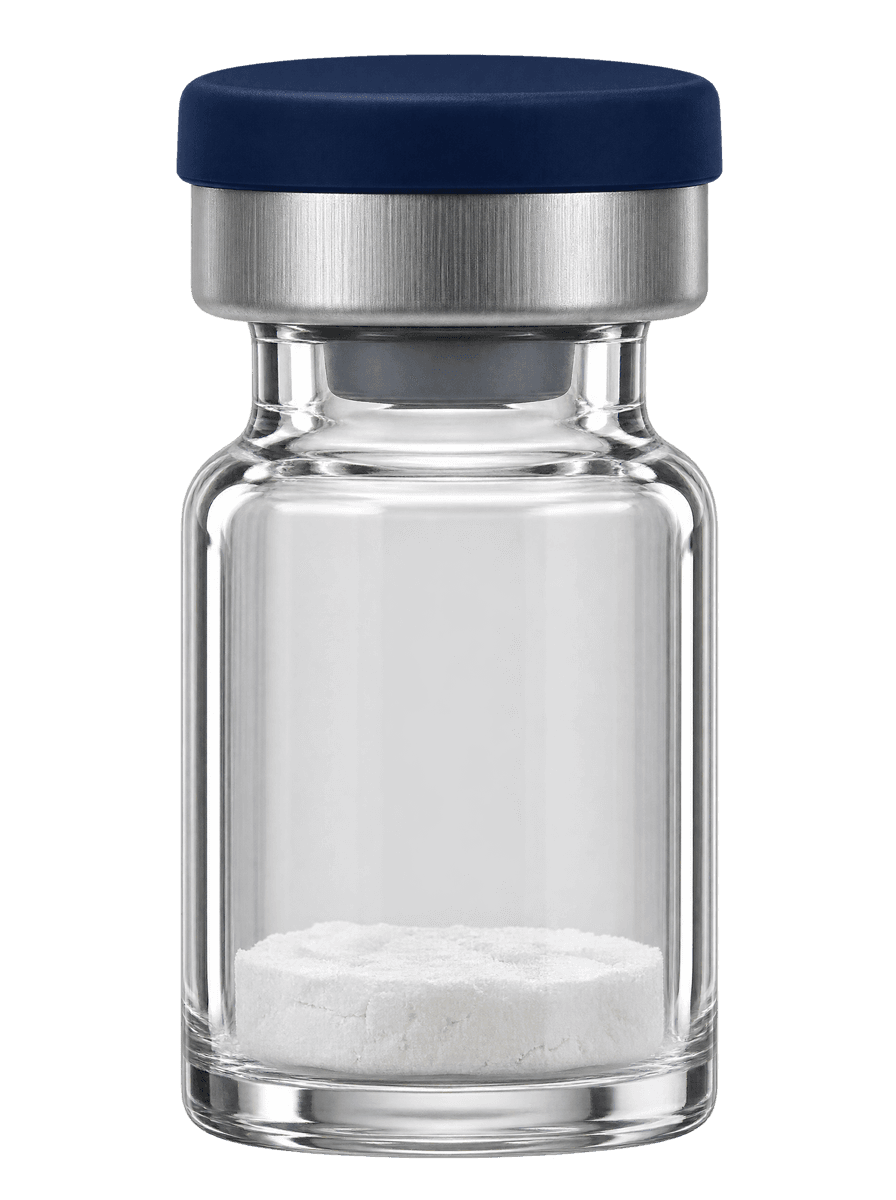
Calculate for your vial
Type what's in your vial, the water you added and your own dose. It returns the units to draw on a U-100 insulin syringe.
- Strength after mixing
- 10 mg/mL
- Each unit holds
- 0.1 mg (100 mcg)
- Doses in the vial at your number
- —
How to mix GHK-Cu
Wash hands and prep
Wash your hands and clean a flat surface. Let both vials reach room temperature before starting.Disinfect the stoppers
Wipe both rubber stoppers with separate alcohol prep pads and let them air dry.Measure the diluent
Draw your pre-calculated volume of bacteriostatic water; a round number simplifies later math — see our mixing-math guide.Add water slowly
Let the water run down the inside vial wall rather than directly onto the powder. The dissolved solution typically turns blue from the copper ion, which is expected.Dissolve by swirling
Gently swirl until fully dissolved and clear (with a blue tint). Do not shake.Label and refrigerate
Label with concentration and date, refrigerate per product guidance, and inspect before any use.
Questions
Short answers about GHK-Cu.
What is GHK-Cu?
GHK-Cu is a small naturally occurring tripeptide made of glycine, histidine, and lysine that binds a copper ion. It is found in human plasma, saliva, and urine, and declines with age. It is widely used in skincare and studied for wound healing and tissue remodeling.
What is GHK-Cu used for?
GHK-Cu is most commonly used as a cosmetic ingredient in serums and creams marketed for skin firmness, fine lines, and skin repair. In research it has been studied for wound healing, collagen synthesis, and antioxidant activity. It is not an approved drug for treating disease.
Is GHK-Cu FDA-approved?
GHK-Cu is used as a cosmetic ingredient, which in the U.S. does not require pre-market FDA drug approval. It is not an FDA-approved drug for any medical condition, and injectable research-only forms are not approved for human use.
Is topical GHK-Cu different from injectable GHK-Cu?
Yes. Topical GHK-Cu in cosmetics is a regulated personal-care use with a long history. Injectable or reconstituted research-only GHK-Cu is not FDA-approved for human use and carries different and largely uncharacterized risks. This page is educational only.
What are the reported side effects of GHK-Cu?
Topical use is generally well tolerated but can cause irritation or contact reactions in some people. Data on injectable research-only GHK-Cu are very limited. Consult a licensed clinician or dermatologist before use, especially anything beyond topical cosmetics.
Does GHK-Cu help with hair?
Some cosmetic research and products explore copper peptides for scalp and hair appearance, but evidence is limited and it is not an approved hair-loss treatment. A dermatologist can advise on what is actually supported for an individual.
How is research-grade GHK-Cu reconstituted?
Lyophilized GHK-Cu powder is typically reconstituted with bacteriostatic water added slowly down the vial wall and swirled gently. The solution often takes on a blue tint from the copper ion. See the steps below and our reconstitution guide.
References
- 1.GHK peptide as a natural modulator of multiple cellular pathways in skin regeneration — BioMed Research International (PubMed-indexed) · 2015
- 2.The human tripeptide GHK-Cu in prevention of oxidative stress and degenerative conditions of aging — Oxidative Medicine and Cellular Longevity (PubMed-indexed) · 2018
- 3.Copper peptide GHK-Cu cosmetic ingredient safety assessment — Cosmetic Ingredient Review (CIR) literature · 2019
Education, not medical advice. WikiPeps records and explains. It never tells you what to take.