
Dosage and mixing
Semax dosage and mixing
Reference doses with their sources, and the mixing math for each vial size. A calculator, not advice.
What sources report
Each figure with where it comes from.
No published human dose
Vial sizes
Pick your vial size
Each size has its own water table and units for each amount.
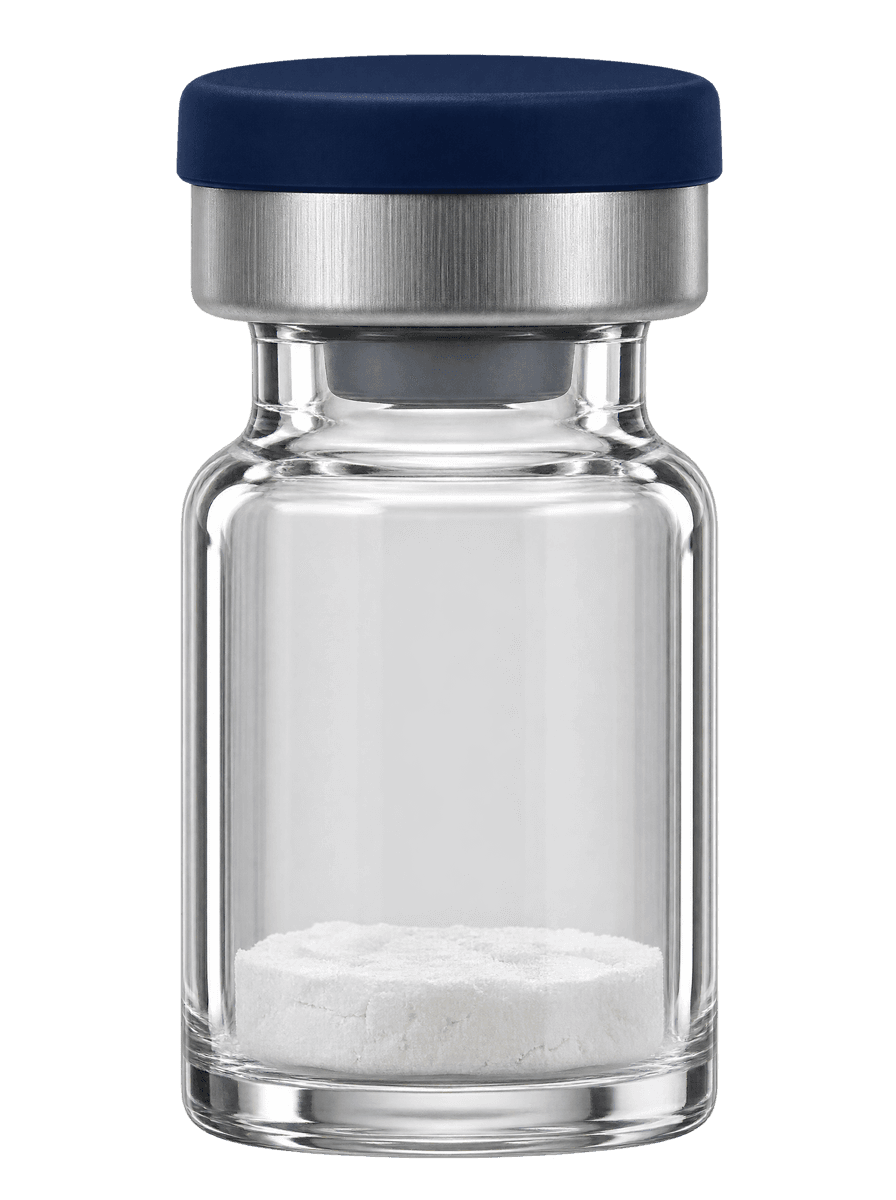
- 10 mg vial
- Mixing and units5 mg/mL with 2 mL water
Calculate for your vial
Type what's in your vial, the water you added and your own dose. It returns the units to draw on a U-100 insulin syringe.
- Strength after mixing
- 5 mg/mL
- Each unit holds
- 0.05 mg (50 mcg)
- Doses in the vial at your number
- —
How to mix Semax
Wash hands and prepare the area
Wash your hands thoroughly and clean a flat work surface. Let the vial and diluent reach room temperature before starting.Disinfect the stoppers
Wipe the rubber stopper of each vial with a fresh alcohol prep pad and let them air dry.Draw the diluent
Draw your pre-planned volume of bacteriostatic water into the syringe. Choosing a round number of milliliters keeps later concentration math simple — see our mixing-math guide.Add the water slowly
Insert the needle and let the water run gently down the inside wall of the vial rather than spraying directly onto the powder, which helps protect the delicate peptide.Dissolve by swirling
Swirl gently until the solution is fully dissolved and clear. Do not shake. Discard the solution if it stays cloudy or shows particles.Label and refrigerate
Label the vial with the contents, concentration, and date, then refrigerate per product guidance and inspect before any use.
Questions
Short answers about Semax.
What is Semax?
Semax is a synthetic heptapeptide (seven amino acids, sequence Met-Glu-His-Phe-Pro-Gly-Pro) built from the 4-7 fragment of adrenocorticotropic hormone (ACTH) with a Pro-Gly-Pro tail, so it is often described as an analog of the ACTH(4-10) region. It was developed in Russia and is studied as a nootropic and neuroprotective agent. In the U.S. it is sold for research only, not an approved medicine.
What is N-acetyl Semax amidate?
N-acetyl Semax amidate (often shortened to NA-Semax-amidate or NASA) is a chemically modified version of Semax with an acetyl group added to one end and an amide group to the other. These changes are intended to slow enzymatic breakdown. It is a research-vendor modification, not a separately approved drug in Russia or the U.S.
What is Semax studied for?
Most research focuses on ischemic stroke recovery, cognitive and attention effects, and neuroprotection, with proposed links to increased brain-derived neurotrophic factor (BDNF). A large share of this work was done in Russia and in animal models and has not been replicated in large Western randomized trials.
Is Semax FDA-approved?
No. Semax is not approved by the U.S. FDA for any condition and is not part of any approved U.S. drug product. It is approved and prescribed in Russia, but that is a separate regulatory situation. In the U.S. it is sold for research only, labeled 'for research use only.'
Does Semax actually improve memory or focus in healthy people?
This is not well established. Much of the cognitive data comes from Russian studies and animal research; high-quality, blinded trials in healthy adults are limited. A reported effect in a small or unblinded study is not the same as a proven, reliable benefit.
Is Semax legal?
In the U.S., Semax is not a federally controlled substance, but it is also not an approved drug or dietary supplement, and the FDA has been reviewing peptides like it for pharmacy compounding. It is approved as a prescription medicine in Russia. Legal status varies by country, so check local rules.
How is research-grade Semax stored and prepared?
It usually ships as a lyophilized powder that must be kept cold and reconstituted with a sterile diluent before any laboratory use. WikiPeps describes the general handling process for education only and does not publish human dosing protocols or amounts.
References
- 1.Semax, an analogue of adrenocorticotropin (4-10), binds specifically and increases levels of brain-derived neurotrophic factor protein in rat basal forebrain — Journal of Neurochemistry (PubMed PMID 16635254) · 2006
- 2.Semax, an analog of ACTH(4-10) with cognitive effects, regulates BDNF and trkB expression in the rat hippocampus — Brain Research (PubMed PMID 16996037) · 2006
- 3.Semax and Pro-Gly-Pro activate the transcription of neurotrophins and their receptor genes after cerebral ischemia — Cellular and Molecular Neurobiology (PubMed PMID 19633950) · 2009
- 4.The efficacy of semax in the treatment of patients at different stages of ischemic stroke — Zhurnal Nevrologii i Psikhiatrii imeni S.S. Korsakova (PubMed PMID 29798983) · 2018
- 5.Bulk Drug Substances Used in Compounding Under Section 503A of the FD&C Act (503A bulks list and category framework) — U.S. Food & Drug Administration (FDA.gov) · 2026
- 6.July 23-24, 2026: Meeting of the Pharmacy Compounding Advisory Committee (Semax bulk drug substance on the agenda) — U.S. Food & Drug Administration (FDA.gov) · 2026
Education, not medical advice. WikiPeps records and explains. It never tells you what to take.