
Dosage and mixing
PT-141 dosage and mixing
Reference doses with their sources, and the mixing math for each vial size. A calculator, not advice.
What sources report
Each figure with where it comes from.
| Context | Amount | Source |
|---|---|---|
| FDA-approved label dose (Rx-only)Per the FDA label | From the FDA label | FDA label · openFDA record Verbatim FDA label (openFDA SPL). Prescription-only; educational, not a recommendation. |
| Studied: Hypoactive Sexual Desire DisorderRoute: subcutaneous | (Main Study) Subjects will self-administer a fixed dose (1.75 mg) of bremelanotide (BMT) subcutaneously (SC) via auto-injector on an as needed basis with no more than 1 dose taken every 24 hours for 24 weeks | Studied in trials · NCT02333071 Observational human-trial dose — studied, NOT a target or recommendation. Phase 3 (NCT02333071). |
| Studied: Female Sexual Arousal DisorderRoute: subcutaneous | Investigational product: Bremelanotide aqueous solution for subcutaneous (SC) injection, provided as pre-filled syringes containing 0.75, 1.25, or 1.75 mg in 0.3 mL volume. | Studied in trials · NCT01382719 Observational human-trial dose — studied, NOT a target or recommendation. Phase 2 (NCT01382719). |
| Studied: Hypoactive Sexual Desire DisorderRoute: subcutaneous | Subjects will self-administer a fixed dose (1.75 mg) of bremelanotide (BMT) subcutaneously (SC) via auto-injector. | Studied in trials · NCT04943068 Observational human-trial dose — studied, NOT a target or recommendation. Phase 3 (NCT04943068). |
Vial sizes
Pick your vial size
Each size has its own water table and units for each amount.
- 10 mg vial
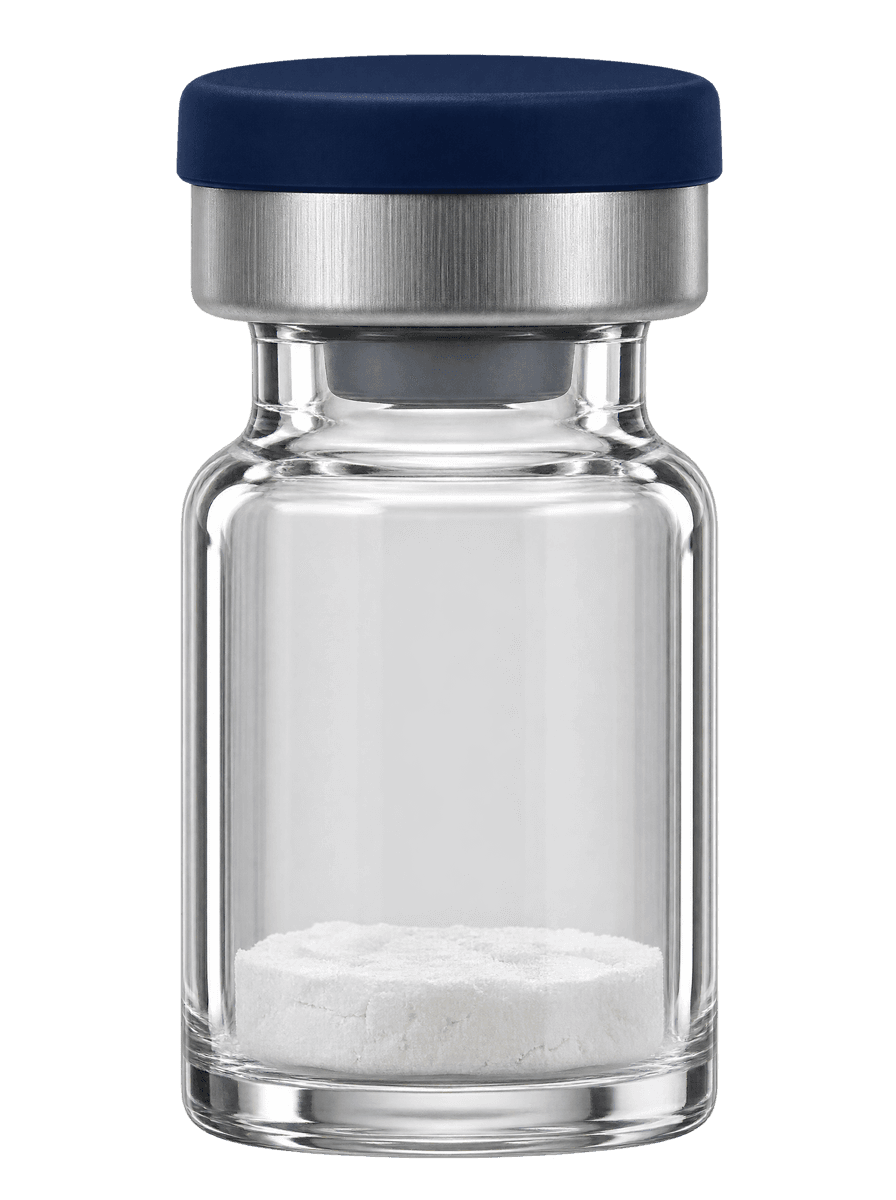
- Mixing and units10 mg/mL with 1 mL water
Calculate for your vial
Type what's in your vial, the water you added and your own dose. It returns the units to draw on a U-100 insulin syringe.
- Strength after mixing
- —
- Each unit holds
- —
- Doses in the vial at your number
- —
How to mix PT-141
Wash hands and prepare the area
Wash your hands thoroughly and clean a flat work surface. Lay out the sealed vial, your diluent, a fresh syringe, and alcohol prep pads. This is a general, education-only overview of how lyophilized peptides are handled in a lab context — it is not instruction to self-administer, and the FDA-approved product (Vyleesi) comes as a prefilled autoinjector that does not require this step.Inspect the vial
Check that the lyophilized powder looks intact and that the vial and seal are undamaged. Discard anything that looks compromised, discolored, or contaminated. Let refrigerated materials come to room temperature so condensation does not form.Disinfect the stoppers
Wipe the rubber stopper of both the peptide vial and the diluent vial with a fresh alcohol prep pad and let them air-dry. Do not touch the cleaned surfaces.Add the diluent slowly down the vial wall
Draw the volume of bacteriostatic or sterile water specified by the product labeling, insert the needle, and let the liquid run slowly down the inside wall of the vial rather than spraying directly onto the powder. The exact diluent volume is a product-specific and clinical question — WikiPeps does not provide peptide dosing amounts.Dissolve gently
Do not shake. Gently swirl or let the vial sit until the powder fully dissolves into a clear solution. Peptides are fragile; forceful mixing can damage them. Discard the solution if it stays cloudy or shows particles.Store correctly
Store reconstituted peptide refrigerated and protected from light, following the labeling, and respect any beyond-use date.
Questions
Short answers about PT-141.
What is PT-141?
PT-141, known generically as bremelanotide, is a synthetic cyclic peptide that activates melanocortin receptors in the brain — primarily MC4R, and also MC1R. It is the active ingredient in the FDA-approved prescription drug Vyleesi. It is studied and used for its effect on sexual desire rather than for muscle, recovery, or anti-aging.
Is PT-141 FDA-approved?
Yes — the molecule is FDA-approved. Bremelanotide was approved in 2019 under the brand name Vyleesi (bremelanotide injection) for premenopausal women with acquired, generalized hypoactive sexual desire disorder (HSDD). Importantly, that approval applies to the specific Vyleesi product, not to vials of 'research-only' PT-141 sold online, which are not the approved medicine and have not been evaluated for safety, purity, or potency.
How does PT-141 work?
Unlike erectile-dysfunction drugs that act on blood vessels, PT-141 works centrally in the brain. It is a melanocortin receptor agonist that activates MC4R (and other melanocortin receptors), pathways linked to sexual motivation and arousal. The exact mechanism by which it improves sexual desire is not fully understood, and it does not work primarily through the vascular system.
What is PT-141 studied for?
Its main, FDA-approved use is low sexual desire (HSDD) in premenopausal women. It has also been studied historically for sexual dysfunction more broadly, including in men, but the approved indication is the HSDD use in premenopausal women. Other uses are investigational and not approved.
What are the common side effects?
In the trials behind Vyleesi, the most common adverse reactions were nausea (about 40%, often with the first dose), flushing (about 20%), headache, injection-site reactions, and vomiting. It can cause a transient rise in blood pressure and a drop in heart rate after dosing, and a small percentage of users reported focal skin darkening (hyperpigmentation). Discuss your individual risks with a clinician.
What is PT-141's half-life?
After subcutaneous injection, bremelanotide is absorbed quickly and has a reported terminal half-life of roughly 2.7 hours in humans (range about 1.9–4.0 hours), which is part of why the approved product is used on an as-needed basis rather than daily.
Does WikiPeps provide a PT-141 dose?
No. Even though an approved product exists, WikiPeps does not publish dosing protocols or amounts for any peptide. The approved drug carries specific labeling, warnings, and a limit on how often it can be used — those are medical decisions for a licensed clinician, not something to copy from a website using unregulated material.
References
- 1.FDA label (openFDA)
- 2.NCT02333071
- 3.NCT01382719
- 4.NCT04943068
- 5.VYLEESI (bremelanotide injection) — Full Prescribing Information (NDA 210557) — U.S. Food and Drug Administration · 2019
- 6.FDA Approves New Treatment for Hypoactive Sexual Desire Disorder in Premenopausal Women — U.S. Food and Drug Administration · 2019
- 7.Bremelanotide for Treatment of Female Hypoactive Sexual Desire — Neurology International (MDPI; indexed in PubMed/PMC) · 2022
- 8.Bremelanotide — LiverTox: Clinical and Research Information on Drug-Induced Liver Injury — National Institute of Diabetes and Digestive and Kidney Diseases / National Library of Medicine (NIH) · 2021
- 9.Bremelanotide for the Treatment of Hypoactive Sexual Desire Disorder: Two Randomized Phase 3 Trials (RECONNECT) — Obstetrics & Gynecology (PubMed) · 2019
Education, not medical advice. WikiPeps records and explains. It never tells you what to take.