
PT-141
How to reconstitute the 5 mg vial and convert any target dose into insulin units. PT-141 is the prescription drug Vyleesi (bremelanotide); its FDA label dose is 1.75 mg subcutaneous, as needed, max 1/24 h and 8/month. Reconstitution math is shown for the 5 mg and 10 mg research vials.
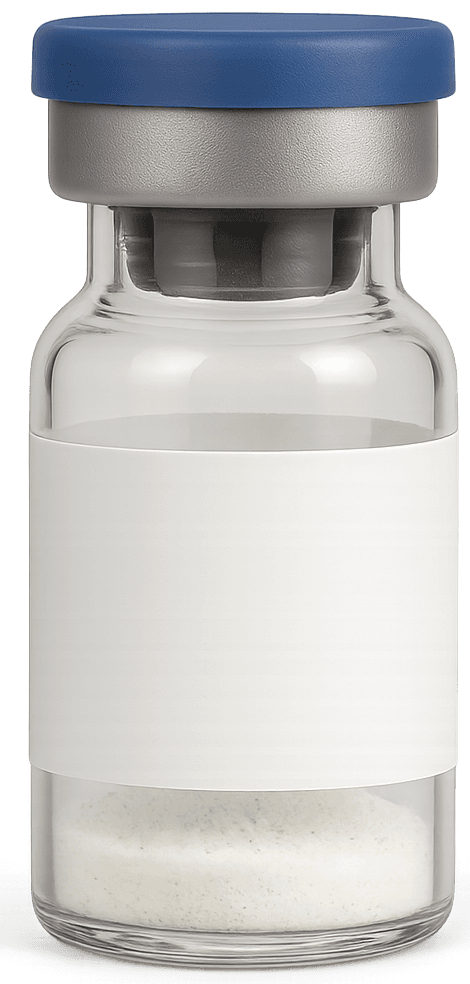
Calculate for your vial
Enter the mg on your PT-141 vial, the bacteriostatic water you added, and your target dose — it works out the exact units to draw on a U-100 insulin syringe, for whatever you personally have.
Reconstitution Calculator
Check the decimal. A misplaced decimal point here is a 10× dosing error. Re-read every number, and confirm your dose with a licensed clinician before you draw.
Educational only — not a dosing recommendation. This tool does the measurement math; it does not tell you what to take. On a U-100 insulin syringe, 100 units = 1 mL.
1 · Find your dose
Pick what you're using PT-141 for and how much bacteriostatic water you added — this pulls out the exact units to draw and how often people report using it.
Inject 1.75 mg subcutaneously via the autoinjector to the abdomen or thigh, as needed, at least 45 minutes before anticipated sexual activity. ( 2.1 ) Do not administer more than one dose within 24 hours. ( 2.1 ) More than 8 doses per month is not recommended. ( 2.1 ) 2.1 Recommended Dosage The recommended dosage of VYLEESI is 1.75 mg administered subcutaneously in the abdomen or thigh, as needed, at least 45 minutes before anticipated sexual activity. The duration of efficacy after each dose is unknown and the… (see full FDA label)
- How / how often
- Per the FDA label
Verbatim FDA label (openFDA SPL). Prescription-only; educational, not a recommendation. Source: https://api.fda.gov/drug/label.json?search=openfda.generic_name%3A%22bremelanotide%22&limit=5
At 1 mL this 5 mg vial is 5 mg/mL (50 mcg per unit). Use the full matrix below to convert a specific amount into U-100 units — measurement math, not a recommendation.
2 · Reconstitute it cleanly, step by step
How to turn the 5 mg powder into a measured liquid with clean, sterile technique. More water means each insulin unit holds less peptide — easier to measure small amounts accurately.
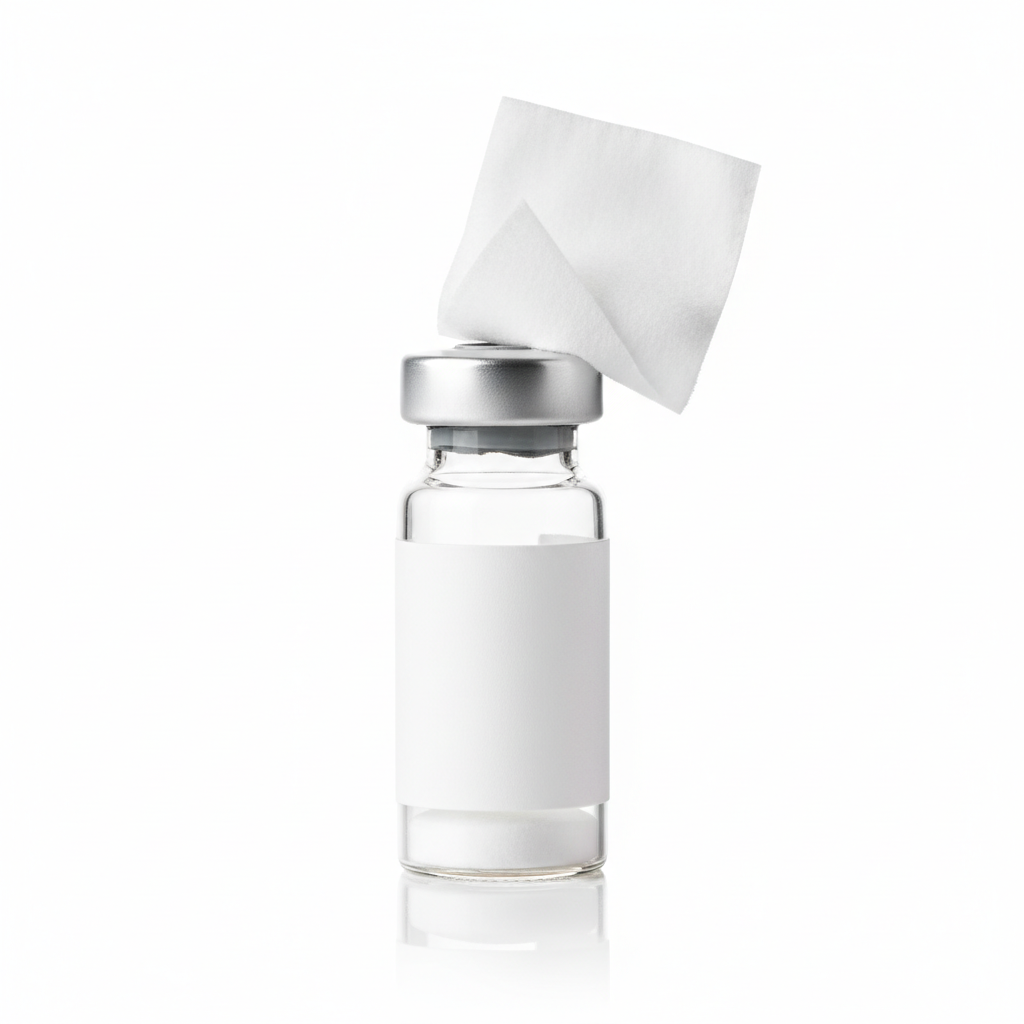 1
1Swab the stoppers
Wipe the rubber top of each vial with an alcohol pad and let it air-dry.
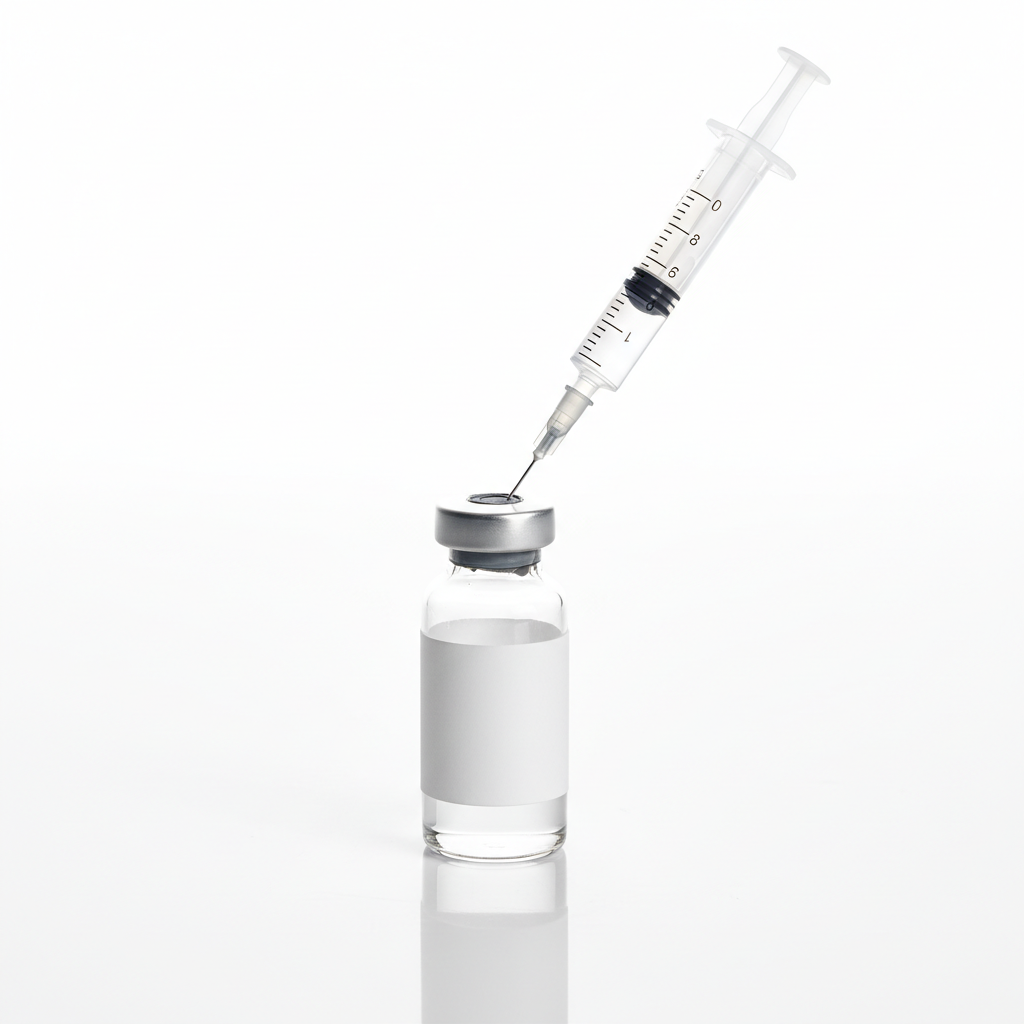 2
2Draw the water
Pull your bacteriostatic water up into the insulin syringe.
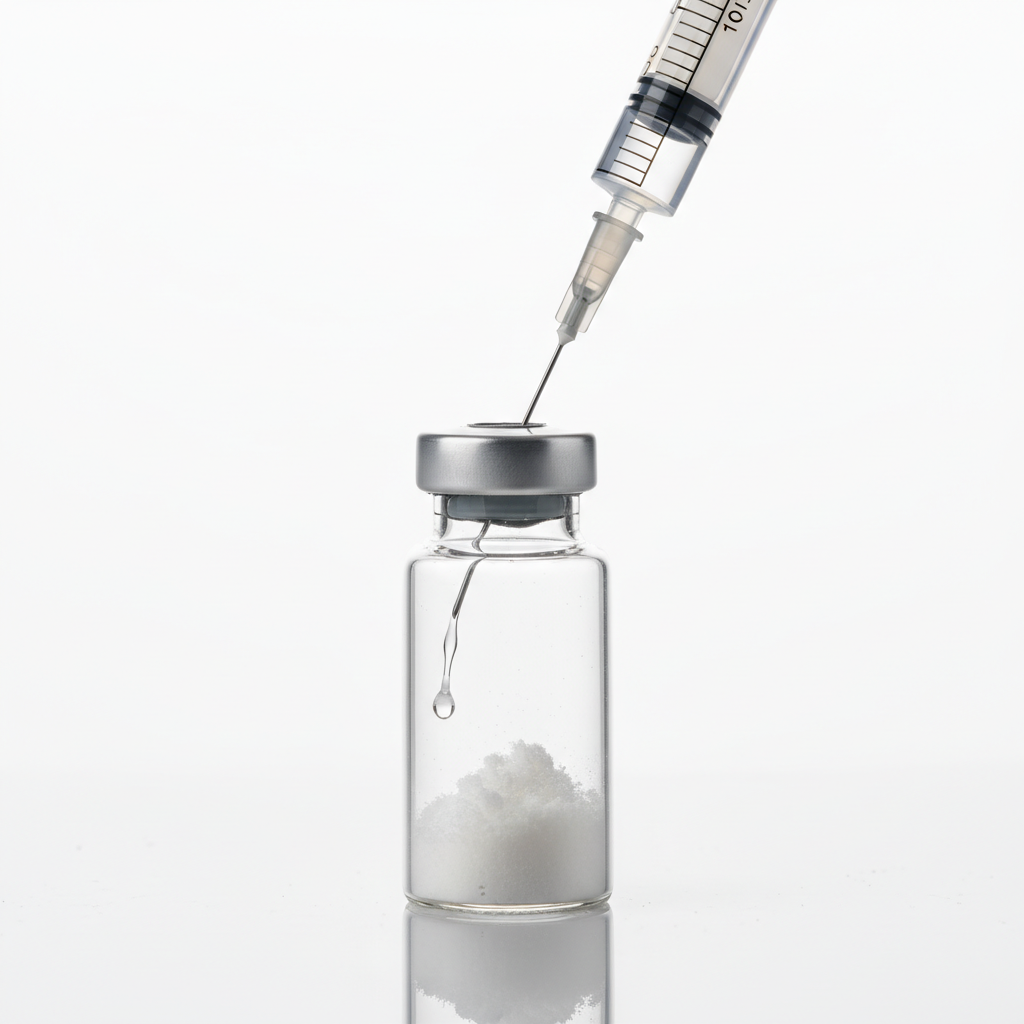 3
3Reconstitute
Inject it slowly down the inside wall of the peptide vial — never straight onto the powder.
 4
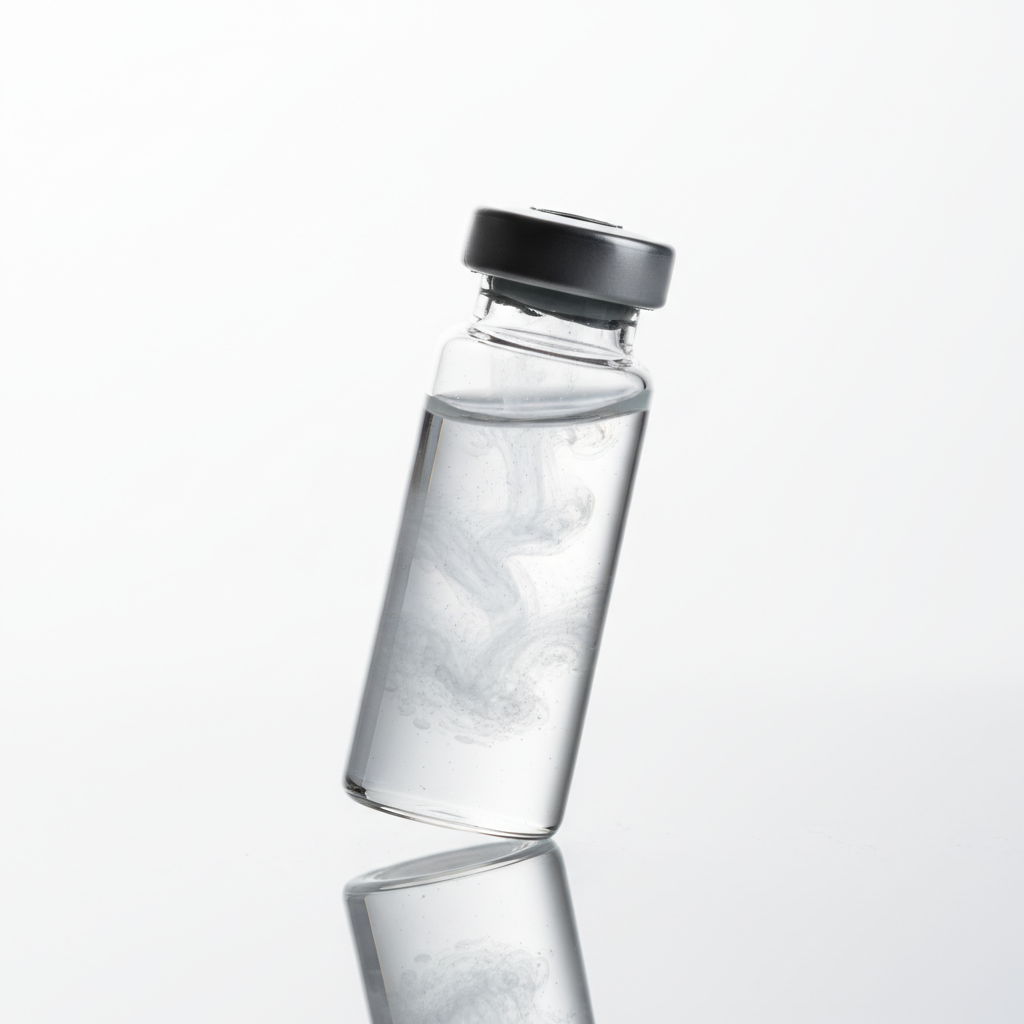
4Swirl to dissolve
Gently swirl until the powder fully dissolves into a clear liquid. Never shake.
 5
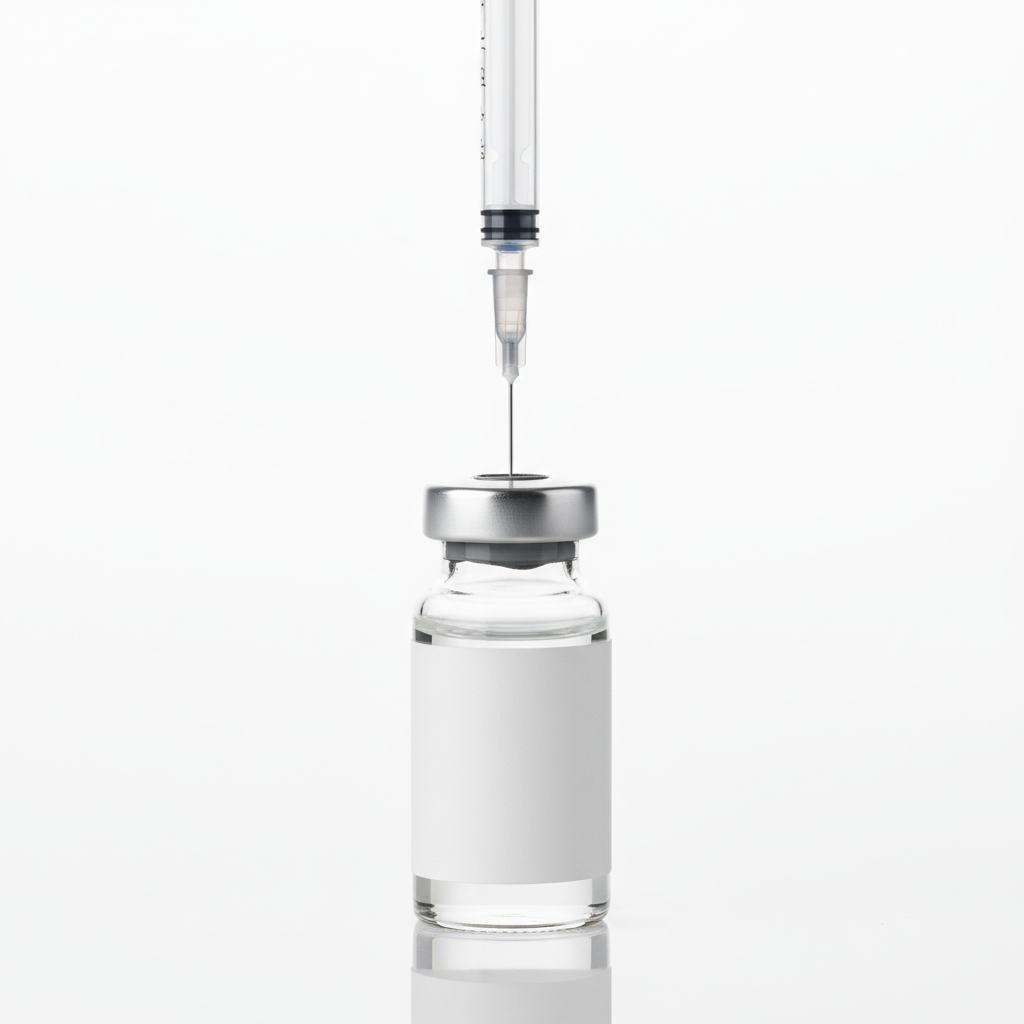
5Equalize, then draw
To draw a dose: push in an equal amount of air first to equalize the pressure, then pull your dose.
- 1
Swab both tops
Wipe the rubber top of the bacteriostatic-water vial and the PT-141 vial stopper with a fresh alcohol pad, and let them air-dry. Never touch the needle or the stoppers after wiping.
Alcohol swab · let dry - 2
Draw the water
First pull 1 mL of air into the syringe and inject it into the bacteriostatic-water vial to equalize the pressure, then draw your 1 mL of water back out. Inject it into the PT-141 vial down the inside glass wall, not onto the powder.
1 mL BAC water - 3
Swirl, don't shake
Gently swirl the 5 mg vial until the powder fully dissolves into a clear liquid. Never shake — shaking can damage the peptide and foam the solution.
Swirl, don't shake - 4
Know your strength
The vial is now 5 mg/mL. Each unit on a U-100 syringe holds about 50 mcg.
5 mg/mL - 5
Re-swab & draw your dose
Wipe the stopper again. With a fresh insulin syringe, pull back 30 units of air and inject it into the vial to equalize the pressure, then draw 30 units (0.3 mL) for a 1.5 mg dose.
30 units - 6
Store it right
Keep the mixed vial in the fridge, away from light. Use a new sterile syringe every time, never share, and drop used sharps in a proper container.
Refrigerate · fresh needle
What each water volume gives you:
3 · Full units reference
Every bacteriostatic-water volume (rows) against every target dose (columns) — each cell is the U-100 units and the exact draw in mL. The highlighted row is the easiest volume to measure.
| BAC water | Concentration | Per unit | 1 mg | 1.5 mg | 1.75 mg |
|---|---|---|---|---|---|
| 1 mLeasy pick | 5 mg/mL | 50 mcg | 20u0.2 mL | 30u0.3 mL | 35u0.35 mL |
| 2 mL | 2.5 mg/mL | 25 mcg | 40u0.4 mL | 60u0.6 mL | 70u0.7 mL |
| 3 mL | 1.67 mg/mL | 16.67 mcg | 60u0.6 mL | 90u0.9 mL | 105u1.05 mL |
4 · Everyday usage
PT-141 (bremelanotide) is the active ingredient in the FDA-approved drug Vyleesi. The figure below is the approved-drug label dose — it is prescription-only and not a recommendation to use a research-chemical vial.
FDA-approved label dose (Rx-only)
Label-citedInject 1.75 mg subcutaneously via the autoinjector to the abdomen or thigh, as needed, at least 45 minutes before anticipated sexual activity. ( 2.1 ) Do not administer more than one dose within 24 hours. ( 2.1 ) More than 8 doses per month is not recommended. ( 2.1 ) 2.1 Recommended Dosage The recommended dosage of VYLEESI is 1.75 mg administered subcutaneously in the abdomen or thigh, as needed, at least 45 minutes before anticipated sexual activity. The duration of efficacy after each dose is unknown and the… (see full FDA label)
- Frequency
- Per the FDA label
Verbatim FDA label (openFDA SPL). Prescription-only; educational, not a recommendation. Source: https://api.fda.gov/drug/label.json?search=openfda.generic_name%3A%22bremelanotide%22&limit=5
Studied: Hypoactive Sexual Desire Disorder
Studied in trials(Main Study) Subjects will self-administer a fixed dose (1.75 mg) of bremelanotide (BMT) subcutaneously (SC) via auto-injector on an as needed basis with no more than 1 dose taken every 24 hours for 24 weeks
- Frequency
- Route: subcutaneous
Observational human-trial dose — studied, NOT a target or recommendation. Phase 3 (NCT02333071). Source: https://clinicaltrials.gov/study/NCT02333071
Studied: Female Sexual Arousal Disorder
Studied in trialsInvestigational product: Bremelanotide aqueous solution for subcutaneous (SC) injection, provided as pre-filled syringes containing 0.75, 1.25, or 1.75 mg in 0.3 mL volume.
- Frequency
- Route: subcutaneous
Observational human-trial dose — studied, NOT a target or recommendation. Phase 2 (NCT01382719). Source: https://clinicaltrials.gov/study/NCT01382719
Studied: Hypoactive Sexual Desire Disorder
Studied in trialsSubjects will self-administer a fixed dose (1.75 mg) of bremelanotide (BMT) subcutaneously (SC) via auto-injector.
- Frequency
- Route: subcutaneous
Observational human-trial dose — studied, NOT a target or recommendation. Phase 3 (NCT04943068). Source: https://clinicaltrials.gov/study/NCT04943068
Frequently asked questions
How many insulin units is 1 mg of PT-141 from a 5 mg vial?
- Reconstituting a 5 mg vial with 1 mL of bacteriostatic water gives 5 mg/mL — about 50 mcg per unit. Drawing 1 mg is 0.2 mL, or 20 units on a U-100 insulin syringe. This is measurement math, not a dose recommendation.
How many insulin units is 1.5 mg of PT-141 from a 5 mg vial?
- Reconstituting a 5 mg vial with 1 mL of bacteriostatic water gives 5 mg/mL — about 50 mcg per unit. Drawing 1.5 mg is 0.3 mL, or 30 units on a U-100 insulin syringe. This is measurement math, not a dose recommendation.
Is PT-141 an approved medicine?
- Yes — as the prescription drug Vyleesi (bremelanotide), PT-141 is FDA-approved (2019) for premenopausal women with hypoactive sexual desire disorder. The label dose is 1.75 mg injected under the skin, as needed, with no more than one dose in 24 hours and no more than eight per month. Research-chemical PT-141 is the same molecule but is not a regulated medicine; dosing decisions belong with a licensed clinician.
Why does 3 mL of water push the label dose over one syringe?
- More bacteriostatic water lowers the concentration, so each insulin unit holds less peptide and a fixed dose takes more units. At 3 mL a 5 mg vial is dilute enough that the 1.75 mg label dose needs more than a 100-unit syringe — use less water (the highlighted row) to keep the draw on one syringe.
References
WikiPeps is a community reference. Reconstitution figures are deterministic measurement math; usage figures are sourced and labeled. Nothing here is medical advice, a recommendation, or an offer to sell peptides — dosing decisions belong with a licensed clinician.