
Dosage and mixing
TB-500 dosage and mixing
Reference doses with their sources, and the mixing math for each vial size. A calculator, not advice.
What sources report
Each figure with where it comes from.
Show what people report
| Context | Amount | Source |
|---|---|---|
| Loading phaseAn initial higher-frequency block that community write-ups describe for the first few weeks — commonly ~2.5 mg twice weekly (≈5 mg/wk). | 2.5 mgTwice weekly · ~4–6 weeks, then taper to maintenance | What people report · Anecdotal, not a recommendation Community-reported and anecdotal — not from controlled human trials, not a recommendation, and not medical advice. |
| MaintenanceA lower-frequency phase described after the loading block. | 2–2.5 mgOnce weekly or every other week | What people report · Anecdotal, not a recommendation Community-reported and anecdotal — not from controlled human trials, not a recommendation, and not medical advice. |
Vial sizes
Pick your vial size
Each size has its own water table and units for each amount.
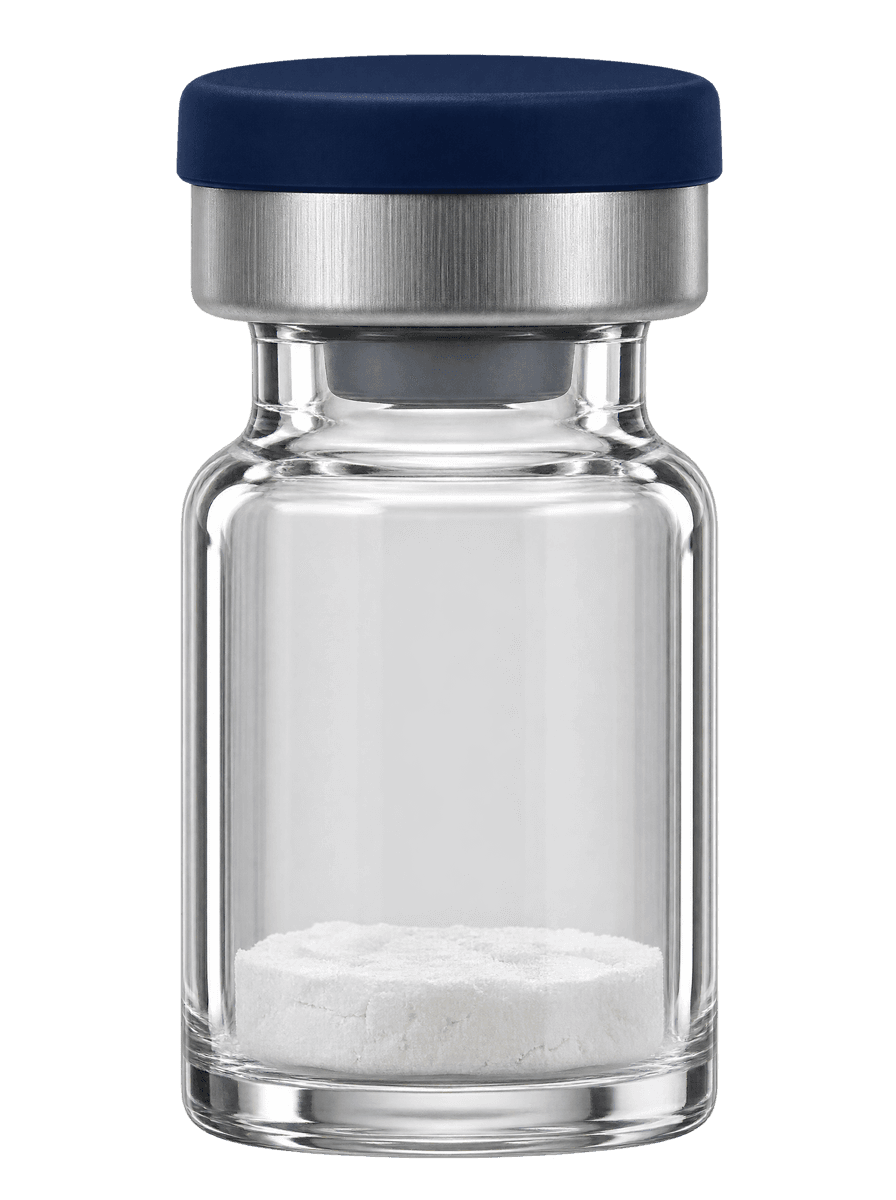
- 10 mg vial
- Mixing and units5 mg/mL with 2 mL water
Calculate for your vial
Type what's in your vial, the water you added and your own dose. It returns the units to draw on a U-100 insulin syringe.
- Strength after mixing
- 5 mg/mL
- Each unit holds
- 0.05 mg (50 mcg)
- Doses in the vial at your number
- —
How to mix TB-500
Prepare your space and hands
Wash your hands and clean a flat surface. Allow both vials to reach room temperature to limit condensation inside the vial.Disinfect the stoppers
Wipe both rubber stoppers with separate alcohol prep pads and let them air dry fully before inserting any needle.Measure the diluent
Draw your pre-calculated volume of bacteriostatic water. Choosing a round number simplifies later dose math — see our mixing-math guide.Add water against the glass
Insert the needle and let the water flow slowly down the inside wall of the vial rather than directly onto the powder, which helps protect the peptide.Dissolve without shaking
Gently swirl or roll the vial until the solution is completely clear. Never shake vigorously.Label and store cold
Label with concentration and date and refrigerate per product guidance. Discard if you see cloudiness or particles.
Questions
Short answers about TB-500.
What is TB-500?
TB-500 is a synthetic peptide based on a fragment of Thymosin Beta-4 (Tβ4), a naturally occurring protein found in nearly all human and animal cells that plays a role in actin regulation, cell migration, and tissue repair. TB-500 is sold for research only and is not an approved medicine.
Is TB-500 the same as Thymosin Beta-4?
They are closely related but not identical. Thymosin Beta-4 is the full 43-amino-acid natural protein. TB-500 typically refers to a synthetic peptide that contains the active actin-binding region of Tβ4. Marketing often uses the names interchangeably, which can be misleading.
What is TB-500 studied for?
Preclinical research on Thymosin Beta-4 and TB-500 has explored wound healing, muscle and tendon repair, corneal injury, and cardiac tissue protection after injury. This work is largely in animals and cells and does not establish human safety or efficacy.
Is TB-500 FDA-approved?
No. TB-500 is not approved by the FDA for any use. Thymosin Beta-4 has been investigated in some early clinical research, but TB-500 itself is sold for research only and is not a recognized therapy.
Is TB-500 banned in sports?
Yes. The World Anti-Doping Agency prohibits TB-500 and Thymosin Beta-4 in sport at all times under its growth factors and peptides category. Athletes subject to drug testing should avoid it.
What are the reported side effects of TB-500?
Human safety data are very limited. Anecdotal reports mention fatigue, lightheadedness, and injection-site reactions, but these are not well studied. Because long-term effects and interactions are unknown, consult a licensed clinician before considering it.
How is TB-500 reconstituted?
Lyophilized TB-500 powder is typically reconstituted with bacteriostatic water added slowly down the vial wall, then gently swirled until clear. See the steps below and our full reconstitution guide for details.
References
- 1.Thymosin beta4: actin-sequestering protein moonlights to repair injured tissues — Trends in Molecular Medicine (PubMed-indexed) · 2007
- 2.Thymosin beta 4 and cardiac repair — Annals of the New York Academy of Sciences (PubMed-indexed) · 2010
- 3.Prohibited List — Peptides and Growth Factors (S2) — World Anti-Doping Agency (WADA) · 2024
Education, not medical advice. WikiPeps records and explains. It never tells you what to take.