Dosage and mixing
NAD+ dosage and mixing
Reference doses with their sources, and the mixing math for each vial size. A calculator, not advice.
What sources report
Each figure with where it comes from.
Show what people report
| Context | Amount | Source |
|---|---|---|
| Wellness use (community)Clinics typically give NAD+ as a slow IV drip; some people report small subcutaneous doses at home. The amount is far larger (milligrams) than most peptides. | 25–100 mgIV: per clinic protocol · SC: 1–2× weekly (community) · Often given in short blocks of sessions (community) | What people report · Anecdotal, not a recommendation Community-reported and anecdotal. NAD+ is an endogenous coenzyme, not an FDA-approved drug for anti-aging or performance; the dominant clinic ROUTE is slow intravenous infusion (rapid IV and SC injection are commonly reported as uncomfortable). No validated dose exists for these uses — this is not a recommendation. |
Vial sizes
Pick your vial size
Each size has its own water table and units for each amount.
- 250 mg vial
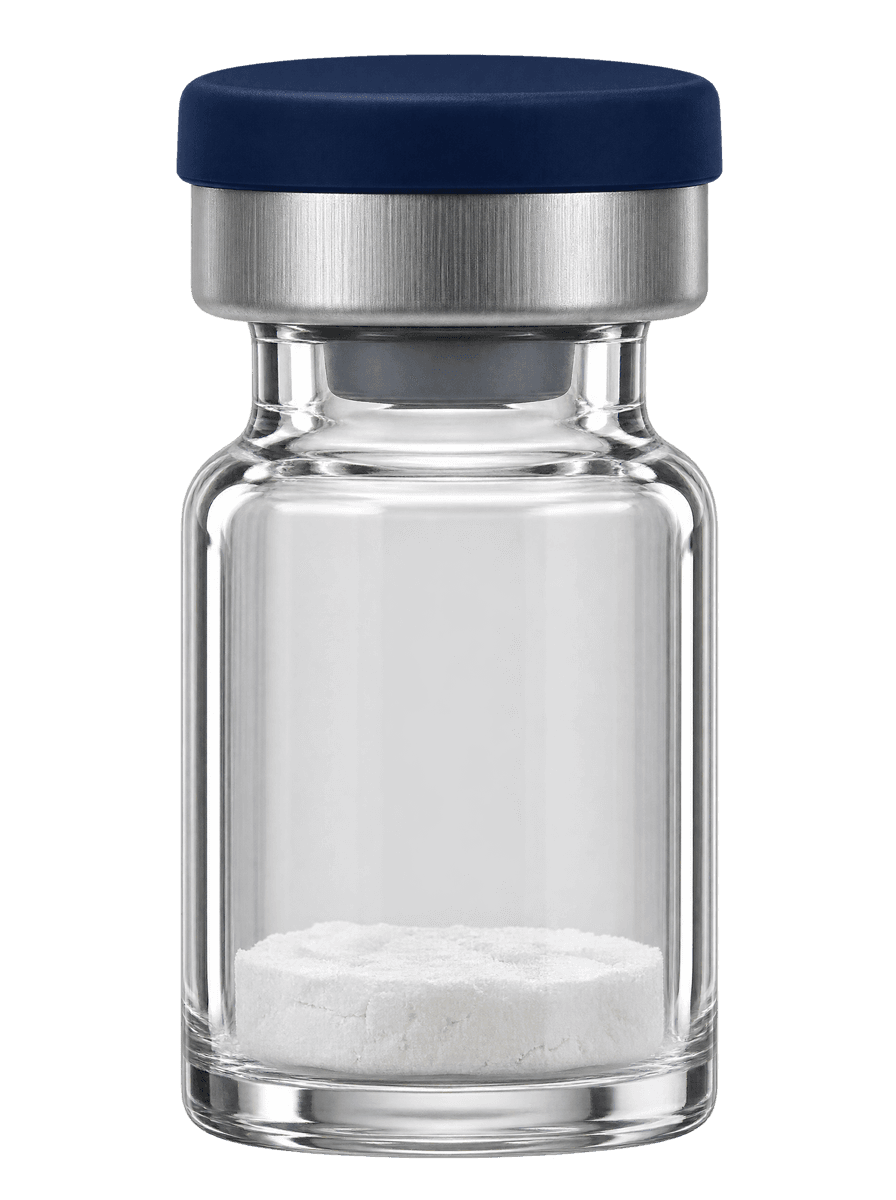
- Mixing and units50 mg/mL with 5 mL water
- 500 mg vial
- Mixing and units100 mg/mL with 5 mL water
Calculate for your vial
Type what's in your vial, the water you added and your own dose. It returns the units to draw on a U-100 insulin syringe.
- Strength after mixing
- —
- Each unit holds
- —
- Doses in the vial at your number
- —
How to mix NAD+
Wash hands and prepare the area
Wash your hands thoroughly and clean a flat work surface. Let the vial and diluent reach room temperature before starting.Disinfect the stoppers
Wipe the rubber stopper of each vial with a fresh alcohol prep pad and let them air dry.Draw the diluent
Draw your pre-planned volume of bacteriostatic water into the syringe. Choosing a round number of milliliters keeps later concentration math simple — see our mixing-math guide.Add the water slowly
Insert the needle and let the water run gently down the inside wall of the vial rather than spraying directly onto the powder, which helps protect the compound.Dissolve by swirling
Swirl gently until the solution is fully dissolved and clear. Do not shake. Discard the solution if it stays cloudy or shows particles.Label and refrigerate
Label the vial with the contents, concentration, and date, then refrigerate per product guidance and inspect before any use.
Questions
Short answers about NAD+.
What is NAD+?
NAD+ (nicotinamide adenine dinucleotide) is a coenzyme found in every living cell. It is not a foreign drug — your body makes it from vitamin B3 forms and from precursors like nicotinamide riboside (NR) and nicotinamide mononucleotide (NMN). It is central to how cells turn food into energy and repair DNA.
What is NAD+ studied for?
Research interest focuses on aging, metabolic health, mitochondrial function, and exercise adaptation, because tissue NAD+ levels appear to fall with age. Most human work has tested oral precursors (NR, NMN) rather than NAD+ itself, and reviewers describe the clinical benefits to date as modest and not firmly established.
Is NAD+ FDA-approved?
No. NAD+ is not an FDA-approved drug for anti-aging, energy, addiction recovery, or athletic performance. IV NAD+ infusions and injectable NAD+ are offered by wellness clinics under off-label or 'integrative' frameworks, and research-grade NAD+ is sold 'for research use only.' None of these are FDA-approved products for those uses.
Do oral NAD+ precursors actually raise NAD+ levels?
Human trials show that oral precursors such as nicotinamide riboside and nicotinamide mononucleotide can raise blood NAD+ levels, often roughly doubling them after about two weeks in some studies. Whether that translates into meaningful clinical benefits in healthy people is still uncertain, and several reviewers caution that effects have been overstated.
What are the risks of IV or injectable NAD+?
Reported IV NAD+ side effects include nausea, flushing, lightheadedness, headache, chest pressure, and muscle cramps, which are often tied to fast infusion rates. Any injection also carries risks of infection or reactions, and unregulated research-grade products may be contaminated or mislabeled. Talk to a licensed clinician before considering it.
Is NAD+ legal, and is it allowed for athletes?
NAD+ itself is not a controlled substance and is not named on the 2026 WADA Prohibited List. However, anti-doping experts note that WADA's S0 category covers non-approved substances, and WADA's IV-infusion limits can be exceeded by typical NAD+ drip volumes. Athletes should verify current rules and use strict liability caution.
How is research-grade NAD+ stored and prepared?
It usually ships as a lyophilized powder that must be kept cold and reconstituted with a sterile diluent before any laboratory use. WikiPeps describes the general handling process for education only and does not publish human dosing protocols or amounts.
References
- 1.Nicotinamide Adenine Dinucleotide in Aging Biology: Potential Applications and Many Unknowns — Endocrine Reviews (PubMed-indexed) · 2023
- 2.Chronic nicotinamide riboside supplementation is well-tolerated and elevates NAD+ in healthy middle-aged and older adults — Nature Communications (PubMed-indexed) · 2018
- 3.What is really known about the effects of nicotinamide riboside supplementation in humans — Science Advances (PubMed-indexed) · 2023
- 4.Improved Physical Performance Parameters in Patients Taking Nicotinamide Mononucleotide (NMN): A Systematic Review of Randomized Control Trials — Cureus (PubMed-indexed) · 2024
- 5.NAD+ homeostasis and its role in exercise adaptation: A comprehensive review — Free Radical Biology and Medicine (PubMed-indexed) · 2024
- 6.Rules, Risks, and Testing of NAD+ in Athletics and Armed Forces — Banned Substances Control Group (BSCG) · 2025
Education, not medical advice. WikiPeps records and explains. It never tells you what to take.