
Semaglutide
Semaglutide is a prescription GLP-1 receptor agonist medication approved by the FDA and sold as Ozempic and Rybelsus for type 2 diabetes and Wegovy for chronic weight management. It is a prescription drug, not a research chemical, and must be used under medical supervision.
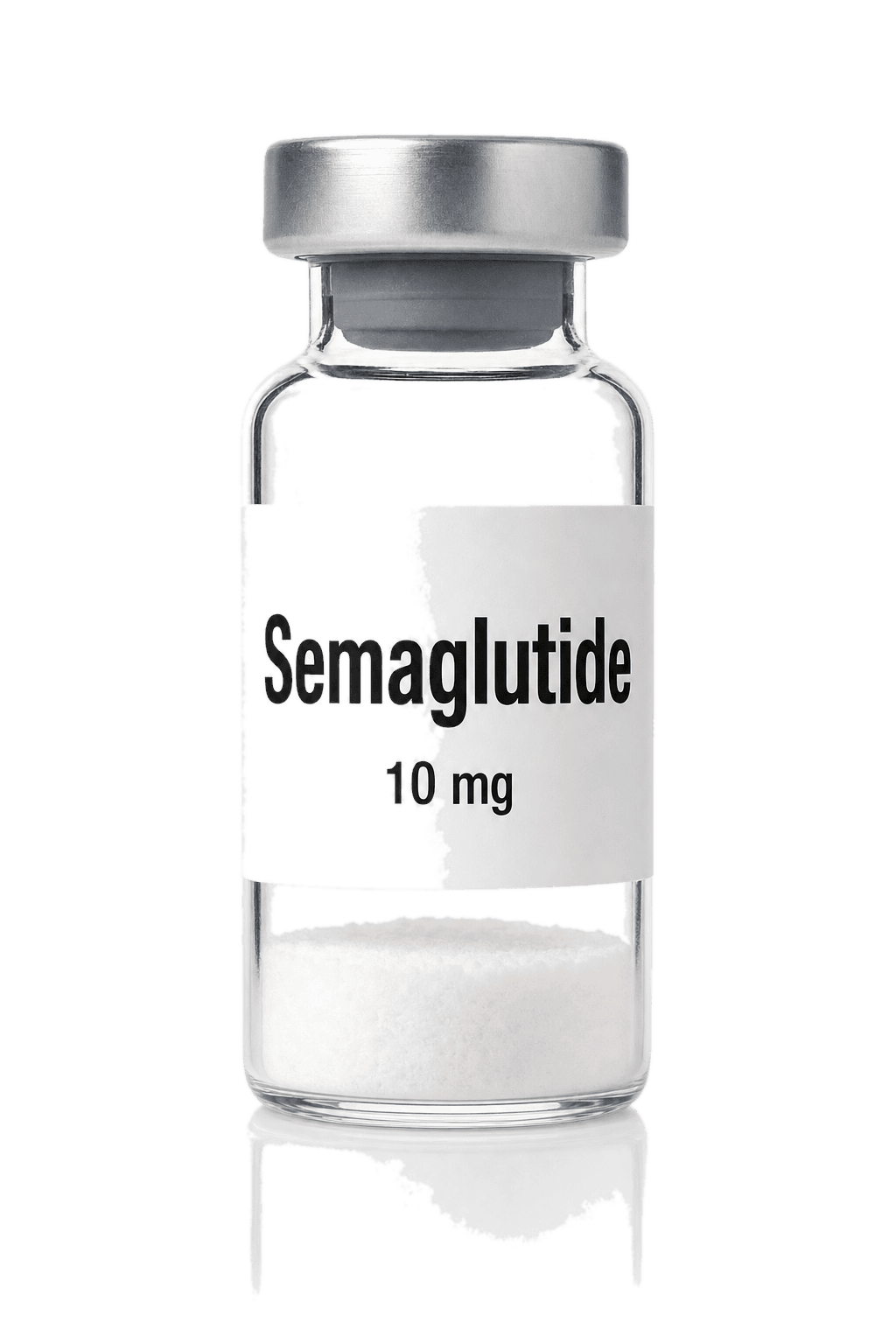
In plain words
Semaglutide is the medicine inside Ozempic and Wegovy. It copies a natural gut hormone that tells your brain you’re full, so people use it to eat less, lose weight, and steady blood sugar.
1 person has this in their stack
Key facts
- Category
- Prescription weight-loss med
- Legal / FDA status
- FDA-approved prescription medication (Ozempic, Wegovy, Rybelsus)
- Half-life
- Approximately 1 week (about 165 hours), supporting once-weekly injectable dosing
- Typical form
- Manufacturer prefilled injection pen (Ozempic, Wegovy) or oral tablet (Rybelsus)
- Also known as
- Ozempic, Wegovy, Rybelsus, GLP-1 receptor agonist
Subcutaneous injection (approved product is a metered pen)
The approved semaglutide products (Ozempic/Wegovy) are once-weekly subcutaneous injections delivered by a finished, pre-filled metered pen — there is no patient reconstitution step. An oral tablet form (Rybelsus) also exists. Reconstituting a research vial is not how the approved medicine is supplied; semaglutide is prescription-only.
Also seen: oral (Rybelsus tablets)
Source: FDA prescribing information — Ozempic/Wegovy (subcutaneous once weekly) and Rybelsus (oral).
Semaglutide is a prescription GLP-1 receptor agonist medication approved by the FDA and sold as Ozempic and Rybelsus for type 2 diabetes and Wegovy for chronic weight management. It is a prescription drug, not a research chemical, and must be obtained and used under the supervision of a licensed clinician. This page is purely educational and is not medical advice.
Important: Unlike the research peptides elsewhere in this library, semaglutide is an approved medicine. WikiPeps does not sell it, does not provide dosing or sourcing guidance, and does not instruct self-administration. The goal here is to help you understand the drug so you can have a better conversation with your prescriber.
What is semaglutide?#
Semaglutide is a GLP-1 (glucagon-like peptide-1) receptor agonist — a medication that mimics a natural hormone released in the gut after eating. By activating GLP-1 receptors, it helps regulate blood sugar and appetite. It is the active ingredient in the brand-name products Ozempic, Rybelsus, and Wegovy, and it is FDA-approved.
What is semaglutide used for?#
Its approved uses depend on the specific product, and a prescribing clinician matches the product to the patient.
| Brand | Form | FDA-approved use |
|---|---|---|
| Ozempic | Once-weekly injection pen | Type 2 diabetes blood-sugar control; cardiovascular risk reduction in certain adults |
| Rybelsus | Daily oral tablet | Type 2 diabetes blood-sugar control |
| Wegovy | Once-weekly injection pen | Chronic weight management in eligible adults and adolescents |
Eligibility, indication, and dosing are clinical decisions. Using a diabetes product for weight loss, or vice versa, is something only a prescriber should determine.
How does semaglutide work?#
Semaglutide activates GLP-1 receptors, which in turn:
- Stimulate insulin release when blood sugar is high.
- Reduce glucagon secretion (a hormone that raises blood sugar).
- Slow gastric emptying, so food leaves the stomach more slowly.
- Act on appetite centers in the brain to increase satiety.
Its long half-life of about one week is what allows the injectable forms to be dosed weekly.
How is semaglutide administered?#
This section is descriptive only — it is not instruction to self-inject. Injectable semaglutide (Ozempic, Wegovy) is supplied as a manufacturer prefilled pen designed for once-weekly subcutaneous injection, typically into the abdomen, thigh, or upper arm. Patients are trained directly by their clinician or pharmacist, and the pen, needles, and storage are handled per the manufacturer's instructions for use. Rybelsus is a daily oral tablet taken on an empty stomach with a small sip of water.
Because semaglutide pens are finished, FDA-regulated products, there is no patient reconstitution step the way there is with lyophilized research peptides. The pen is used as supplied.
What are the side effects and risks?#
Commonly reported side effects include nausea, vomiting, diarrhea, constipation, and abdominal discomfort, particularly when starting or increasing the dose. The prescribing information also describes more serious considerations, including a boxed warning about thyroid C-cell tumors observed in rodents (it is contraindicated in people with a personal or family history of medullary thyroid carcinoma or MEN 2), and potential risks such as pancreatitis, gallbladder problems, and hypoglycemia when combined with other diabetes medicines. Only a prescribing clinician can weigh these risks for an individual.
Why does counterfeit and compounded semaglutide matter?#
Because demand is high, the FDA has warned about counterfeit and improperly compounded semaglutide products, including dosing errors and unverified ingredients. The safest path is a legitimate prescription filled at a licensed pharmacy. WikiPeps strongly discourages sourcing prescription drugs outside the regulated system and does not facilitate it.
The bottom line#
Semaglutide (Ozempic, Wegovy, Rybelsus) is an FDA-approved prescription GLP-1 medication for type 2 diabetes and chronic weight management. It is a real medicine with real risks, not a research chemical, and it should only be obtained with a valid prescription and used under a licensed clinician's supervision. Use this page to understand it and to ask your prescriber informed questions.
Side effects & safety
As an FDA-approved GLP-1, its side effects are well documented — mostly gastrointestinal, and heaviest while the dose steps up.
Commonly reported
- Nausea
- Diarrhea or constipation
- Vomiting
- Reduced appetite / early fullness
- Stomach discomfort or reflux
Less common — worth knowing
- Gallbladder problems
- Pancreatitis (rare)
- Injection-site reactions
Carries a boxed warning for thyroid C-cell tumors (seen in rodents) and is not for people with a personal/family history of medullary thyroid cancer or MEN2. A prescriber screens for this.
Educational only — not medical advice. Everyone responds differently; talk to a licensed clinician before starting Semaglutide, and stop and seek medical care for any severe or unusual reaction.
Tried Semaglutide, or have a question about it?
Ask the community or share what you noticed — real people doing this carefully. Takes 30 seconds.
Frequently asked questions
What is semaglutide?
- Semaglutide is a GLP-1 (glucagon-like peptide-1) receptor agonist, a prescription medication that mimics a natural gut hormone to help regulate blood sugar and appetite. It is FDA-approved and sold under brand names Ozempic, Rybelsus, and Wegovy. It must be prescribed and supervised by a licensed clinician.
What is semaglutide used for?
- Ozempic and Rybelsus are FDA-approved to improve blood sugar in adults with type 2 diabetes (Ozempic also for reducing cardiovascular risk in certain patients). Wegovy is approved for chronic weight management in eligible adults and adolescents. Uses and eligibility are determined by a prescribing clinician.
Is semaglutide the same as Ozempic and Wegovy?
- Yes — semaglutide is the active ingredient in all three. Ozempic and Rybelsus are approved for type 2 diabetes, and Wegovy is approved for weight management. They differ in dosing and approved indication, which is why a clinician matches the right product to the right patient.
Is semaglutide FDA-approved?
- Yes. Unlike many research peptides, semaglutide is FDA-approved and is a prescription medication. It should only be obtained through a licensed pharmacy with a valid prescription and used under medical supervision.
What are the common side effects of semaglutide?
- Commonly reported side effects include nausea, vomiting, diarrhea, constipation, and abdominal discomfort, especially when starting or increasing the dose. Serious risks are described in the prescribing information, including a boxed warning about thyroid C-cell tumors seen in rodents. A prescribing clinician reviews these risks for each patient.
How is semaglutide administered?
- Injectable semaglutide (Ozempic, Wegovy) comes in a manufacturer prefilled pen for once-weekly subcutaneous injection, and Rybelsus is a daily oral tablet. Patients are trained by their clinician or pharmacist; this page describes the products factually and is not self-administration instruction.
Why does WikiPeps cover a prescription drug?
- Because semaglutide is one of the most discussed peptide-based medications, and accurate, non-promotional education helps people ask their clinician the right questions. WikiPeps does not sell semaglutide and does not provide dosing or sourcing guidance for prescription drugs.
References
- 1.Ozempic (semaglutide) injection — FDA Prescribing Information — Novo Nordisk / U.S. Food and Drug Administration · 2024
- 2.Wegovy (semaglutide) injection — FDA Prescribing Information — Novo Nordisk / U.S. Food and Drug Administration · 2024
- 3.Once-Weekly Semaglutide in Adults with Overweight or Obesity (STEP 1 trial) — New England Journal of Medicine (PubMed-indexed) · 2021
- 4.FDA warns against compounded semaglutide products and counterfeit risks — U.S. Food and Drug Administration · 2024
What the research shows
FDA-approved drugSemaglutide is the active ingredient in FDA-approved medicines (Ozempic, Wegovy, Rybelsus) backed by large randomized phase 3 trials and a cardiovascular-outcomes trial. The evidence here is among the strongest of any peptide in the library.
Once-Weekly Semaglutide in Adults with Overweight or Obesity (STEP 1)
Wilding JPH, Batterham RL, et al. · 2021 · N Engl J Med 2021;384:989-1002
View source NCT03548935Semaglutide and Cardiovascular Outcomes in Patients with Type 2 Diabetes (SUSTAIN-6)
Marso SP, Bain SC, et al. · 2016 · N Engl J Med 2016;375:1834-1844
View source NCT01720446
Citations are real, published sources, graded conservatively. Educational only — not medical advice, and not an endorsement to use any compound.
Improve this page
See something out of date or unclear? Propose an edit — an admin reviews every suggestion before any change is made.
Comments & experiences
What members are saying about Semaglutide — questions, observations, and lived experience. Not medical advice.
Add a comment
Ask a question or share what you've seen — a star rating is optional. Comments post right away once they pass a quick automated check; anything flagged is reviewed first.