
KPV
KPV is a tripeptide (lysine-proline-valine) that forms the tail of the hormone alpha-MSH. In animal and cell studies it has been investigated for anti-inflammatory effects, especially in gut and skin models. It is a research chemical, not an FDA-approved drug, and not a proven human therapy.
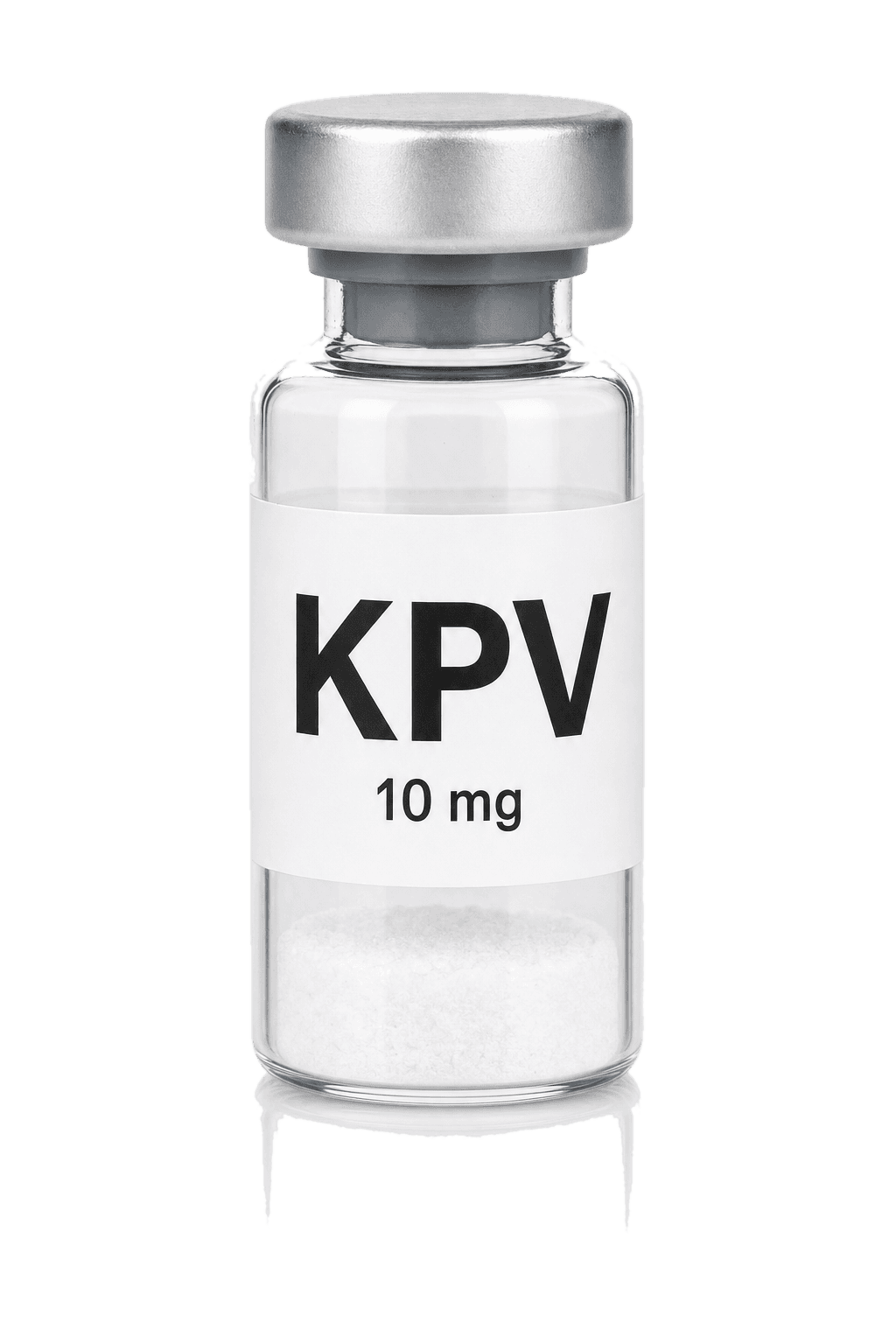
In plain words
KPV is a tiny piece of a natural body signal that may calm inflammation. People look at it hoping to ease gut and skin problems, but so far it’s mostly been tested in animals, not people.
Key facts
- Category
- Calms inflammation
- Legal / FDA status
- Research chemical (not FDA-approved)
- Half-life
- Not well characterized in humans
- Typical form
- Lyophilized (freeze-dried) powder for reconstitution
- Also known as
- Lys-Pro-Val, alpha-MSH (11-13)
Subcutaneous injection — also oral and topical
KPV (the C-terminal fragment of α-MSH) is community-used subcutaneously, but a notable share of interest is ORAL (for gut inflammation) and TOPICAL (for skin). Preclinical colitis work specifically showed oral KPV is taken up by the gut PepT1 transporter. No validated human dose or approved route exists.
Also seen: oral (capsules) · topical
Source: Community-reported practice; preclinical oral-route evidence (Dalmasso & Merlin, Gastroenterology 2008). Not FDA-approved.
KPV is a tripeptide made of lysine, proline, and valine that forms the tail end (residues 11-13) of the hormone alpha-MSH. In cell and animal research it has been investigated for anti-inflammatory effects, particularly in gut and skin models. It is a research chemical, not an approved medicine, and nothing here is medical advice or a recommendation to obtain or use it.
What is KPV?#
KPV is a short peptide whose three-letter name reflects its amino acids: lysine (K), proline (P), and valine (V). The sequence is the carboxy-terminal (C-terminal) fragment of alpha-melanocyte-stimulating hormone (alpha-MSH), a larger hormone involved in pigmentation, energy balance, and immune signaling. Researchers isolated this small fragment to study whether the anti-inflammatory part of alpha-MSH could be separated from its other effects.
Because it is a laboratory research chemical, KPV has not gone through the clinical trials required for a drug to be approved for any medical use. It is usually sold as a lyophilized (freeze-dried) white powder that must be reconstituted with a sterile diluent before it can be measured in liquid form, and it is sometimes labeled "for research use only."
How does KPV work?#
The proposed mechanisms come almost entirely from cell and animal studies, so they should be read as hypotheses rather than established facts. In those models, researchers have reported that KPV may:
- Inhibit NF-kB and MAP kinase signaling, two pathways that drive inflammatory gene activity.
- Lower secretion of pro-inflammatory cytokines such as TNF-alpha, IL-1beta, and IL-6.
- Enter cells partly through PepT1, a di/tripeptide transporter expressed in intestinal and immune cells that can increase during gut inflammation.
- Act largely independent of melanocortin receptors, unlike full alpha-MSH, which is one reason it has been studied as a way to keep anti-inflammatory activity while avoiding pigmentation-related effects.
None of these mechanisms has been confirmed in adequately powered human trials. A licensed clinician is the right person to interpret what, if anything, this means for an individual.
What is KPV studied for?#
Most KPV literature is preclinical and centers on inflammation, especially in the gut. The table below summarizes common research themes and their evidence level.
| Research theme | Study type | Evidence level in humans |
|---|---|---|
| Inflammatory bowel disease / colitis | Rodent models, cell culture | No controlled human trials |
| Skin and general inflammation | Cell and animal studies | No controlled human trials |
| Antimicrobial activity (e.g., S. aureus, C. albicans) | In vitro studies | No controlled human trials |
| Neuroinflammation after brain injury (as alpha-MSH 11-13) | Rodent models | No controlled human trials |
| Targeted oral/nanoparticle delivery for colitis | Rodent models | No controlled human trials |
The recurring caveat is the same: animal and cell results do not reliably predict human outcomes, and KPV has not been validated as a treatment for any condition.
Is KPV legal and FDA-approved?#
KPV is not FDA-approved and is not a recognized dietary supplement, so it cannot lawfully be sold for human consumption in the United States. It is marketed only as a research chemical. Its standing under the FDA's 503A bulk drug substances process (the lists that govern which bulk substances compounding pharmacies may use) has been subject to ongoing FDA review, but being reviewed or evaluated is not the same as being approved as a drug. Regulations differ internationally and can change, so verify current local law and consult a licensed professional before drawing any conclusions about legality.
How is KPV dosed in research?#
There is no validated human dose. Published animal studies use doses and delivery methods (including oral, injected, and nanoparticle-based routes) that do not translate directly to people, and they vary widely between experiments. WikiPeps does not publish dosing protocols. Any decision about quantity, route, or frequency is a medical decision that belongs with a licensed clinician who knows your history.
How is KPV reconstituted?#
Lyophilized KPV is reconstituted by slowly adding bacteriostatic water to the vial and gently swirling until the powder fully dissolves. The numbered steps in the "How To" section above outline the general, education-only process, and our reconstitution guide and mixing-math guide explain how to choose a diluent volume and convert it to syringe units.
What are the safety considerations?#
Human safety data are sparse because rigorous clinical trials have not been completed. Animal studies have generally described KPV as well tolerated, but that does not establish a human safety profile, and absence of evidence is not evidence of safety. The uncertainty is itself a concern: unknown long-term effects, variable product purity and sterility in the research-chemical market, and the absence of regulatory oversight all raise risk. Sterility during handling matters, because contamination can cause infection. Because of these unknowns, the only responsible step before considering any peptide is a conversation with a licensed clinician.
The bottom line#
KPV is a tripeptide fragment of alpha-MSH with promising but almost entirely preclinical anti-inflammatory evidence, concentrated in gut and skin models. It is not FDA-approved, not proven in humans, and is sold only as a research chemical. Treat everything here as education, verify the law where you live, and talk to a licensed clinician before making any health decision.
Side effects & safety
Very limited human data; preclinical work suggests it's generally well tolerated.
Commonly reported
- Injection-site reactions
- Little else commonly reported
Mostly animal/preclinical data — no validated human safety profile, and long-term effects are unknown.
Educational only — not medical advice. Everyone responds differently; talk to a licensed clinician before starting KPV, and stop and seek medical care for any severe or unusual reaction.
Tried KPV, or have a question about it?
Ask the community or share what you noticed — real people doing this carefully. Takes 30 seconds.
How to reconstitute lyophilized KPV (educational overview)
What you'll need
- Vial of lyophilized KPV
- Bacteriostatic water (or sterile water per product labeling)
- Sterile insulin syringe or reconstitution syringe
- Alcohol prep pads
- Clean, flat work surface
Wash hands and prepare the area
Wash your hands thoroughly and wipe down a clean, flat surface. Let the vials reach room temperature to reduce condensation.
Disinfect the stoppers
Wipe the rubber stopper of both the KPV vial and the bacteriostatic water vial with separate alcohol prep pads and let them air dry.
Draw the diluent
Draw your pre-calculated volume of bacteriostatic water into the syringe. Use our reconstitution math guide to choose a volume that makes measurement easy.
Add water slowly
Insert the needle into the KPV vial and let the water run slowly down the inside glass wall rather than blasting it directly onto the powder, which can damage the peptide.
Dissolve gently
Remove the syringe and gently swirl or roll the vial. Do not shake. Wait until the solution is completely clear with no visible particles.
Label and refrigerate
Label the vial with the concentration and date, then store it in the refrigerator per product guidance. Inspect for cloudiness or particles before any use.
Frequently asked questions
What is KPV?
- KPV is a tripeptide made of three amino acids: lysine (K), proline (P), and valine (V). The sequence corresponds to the last three residues (11-13) of alpha-melanocyte-stimulating hormone (alpha-MSH). It has been studied mainly in cells and animals for anti-inflammatory activity. It is a research chemical and has not been approved as a medicine.
What is KPV studied for?
- Most published KPV research is preclinical (cells and animals) and focuses on inflammation, particularly in models of inflammatory bowel disease and skin inflammation, with some work on antimicrobial activity. These findings do not establish that KPV is safe or effective in humans.
Is KPV FDA-approved?
- No. KPV is not approved by the U.S. FDA for any use. It is sold only as a research chemical. Whether it may be used by compounding pharmacies under the FDA's 503A bulk drug substances process has been the subject of ongoing FDA review, but being reviewed or evaluated is not the same as being approved as a drug.
Is KPV legal?
- KPV is not an approved drug or dietary supplement in the United States, so it cannot legally be marketed for human consumption. Laws vary by country, and rules for research chemicals can change. Check local regulations and consult a licensed professional.
How is KPV thought to work?
- In laboratory studies, KPV appears to dampen inflammatory signaling by interfering with pathways such as NF-kB and MAP kinase, lowering pro-inflammatory cytokines. Unlike full alpha-MSH, it is reported to act largely without binding melanocortin receptors, partly through the peptide transporter PepT1. These are research-stage mechanisms, not confirmed human effects.
What are the reported side effects of KPV?
- Human safety data are very limited because rigorous human trials are lacking. Animal studies have generally reported good tolerability, but that does not establish a human safety profile. Product purity in the research-chemical market is also inconsistent. Anyone considering it should speak with a licensed clinician first.
How is KPV dosed in research settings?
- Published animal studies use a range of doses and routes that do not translate directly to humans, and there is no established, validated human dose. This page does not provide dosing instructions; dosing decisions belong with a licensed clinician.
References
- 1.PepT1-Mediated Tripeptide KPV Uptake Reduces Intestinal Inflammation — Gastroenterology · 2008
- 2.Melanocortin-derived tripeptide KPV has anti-inflammatory potential in murine models of inflammatory bowel disease — Inflammatory Bowel Diseases · 2008
- 3.Antimicrobial effects of alpha-MSH peptides — Journal of Leukocyte Biology · 2000
- 4.Single Administration of Tripeptide alpha-MSH(11-13) Attenuates Brain Damage by Reduced Inflammation and Apoptosis after Experimental Traumatic Brain Injury in Mice — PLoS One · 2013
- 5.Orally Targeted Delivery of Tripeptide KPV via Hyaluronic Acid-Functionalized Nanoparticles Efficiently Alleviates Ulcerative Colitis — Molecular Therapy · 2017
What the research shows
Preclinical (animal/cell) evidenceKPV (the Lys-Pro-Val C-terminal fragment of α-MSH) has solid preclinical anti-inflammatory evidence, especially in rodent colitis where oral KPV is taken up by the intestinal PepT1 transporter. There are no completed randomized human efficacy trials, and it is not FDA-approved.
PepT1-mediated tripeptide KPV uptake reduces intestinal inflammation
Dalmasso G, Charrier-Hisamuddin L, Nguyen HTT, Yan Y, Sitaraman S, Merlin D · 2008 · Gastroenterology 2008;134(1):166-178 (PMC2431115)
Citations are real, published sources, graded conservatively. Educational only — not medical advice, and not an endorsement to use any compound.
Improve this page
See something out of date or unclear? Propose an edit — an admin reviews every suggestion before any change is made.
Comments & experiences
What members are saying about KPV — questions, observations, and lived experience. Not medical advice.
Add a comment
Ask a question or share what you've seen — a star rating is optional. Comments post right away once they pass a quick automated check; anything flagged is reviewed first.